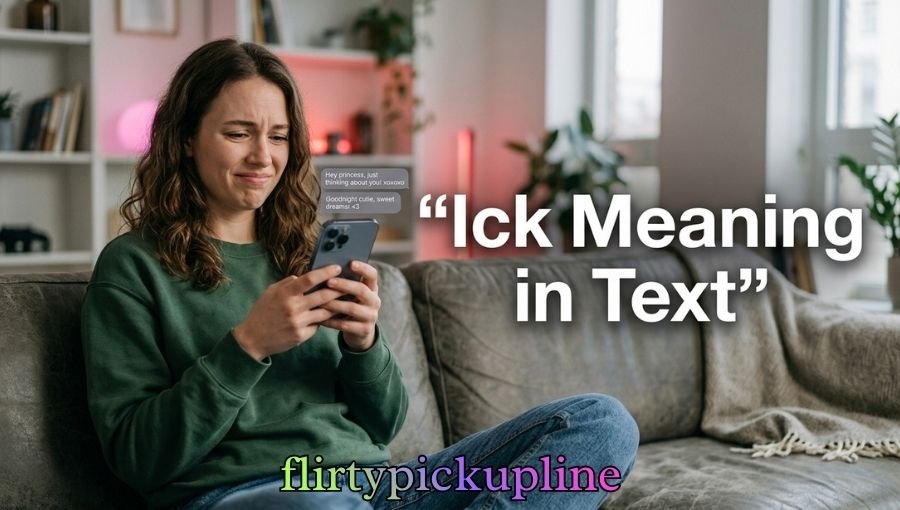
Ick Meaning in Text: Definition, Context, Examples, and Modern Usage (2026 Guide)
Ick Meaning in Text usually comes up when you’re chatting with a friend about dating, social media, or an awkward interaction. Maybe someone you liked suddenly says something strange, sends an embarrassing message, or behaves in a way that instantly changes your opinion. You might tell your friend, “I got the ick.”
But what does that actually mean?
The word ick describes a sudden feeling of discomfort, embarrassment, cringe, or lost attraction. It’s especially common in casual texting, dating conversations, social media posts, and online slang.
The term has become popular because it captures a very specific reaction in just three letters. Instead of saying, “Something about this person suddenly turned me off,” someone can simply say, “That gave me the ick.”
Understanding the expression is useful because its meaning can shift slightly with context and tone. A playful message from a close friend isn’t interpreted the same way as a serious comment from a romantic partner.
In this guide, we’ll break down what the expression means, where you’ll see it, how people use it, and how to respond when someone says they got the ick.
Quick Answer / Quick Definition of “Ick Meaning in Text”

Ick Meaning in Text usually refers to a sudden feeling of discomfort, awkwardness, embarrassment, or lost attraction toward someone. It often appears in dating and casual online conversations. In simple terms, saying “I got the ick” means something unexpectedly turned me off or made me cringe.
Also Read This: OHRD Meaning in Text
Detailed Meaning Breakdown
Primary Meaning
The main meaning of ick is a strong but often temporary feeling of dislike or discomfort. In dating, it commonly describes a moment when someone you found attractive suddenly becomes less appealing.
For example: “He called his mom ‘mama’ in front of everyone, and I got the ick.”
The reaction doesn’t necessarily mean the person did something objectively wrong. Sometimes it’s simply a personal preference.
Secondary Meanings
People also use ick for behavior that feels awkward, embarrassing, overly dramatic, or unpleasant.
A friend might say, “That video gave me the ick,” even when romance isn’t involved. Here, the word simply signals a strong cringe reaction.
It can also describe an uncomfortable physical feeling, although that usage is less central to modern internet slang.
Rare or Misinterpreted Meanings
“Ick” doesn’t automatically mean hatred. It also doesn’t always mean someone is unattractive.
A person can still like someone while finding one particular behavior off-putting. That’s why context matters. The phrase may describe a brief reaction rather than a permanent judgment.
What “Ick Meaning in Text” Means in Different Contexts
In Texting and Messaging
In everyday texts, “ick” is informal and emotional. Someone might text a friend:
“He sent me a voice note singing. I got the ick 😭”
The sender probably isn’t asking for a literal definition. They’re sharing a reaction: something about the interaction suddenly felt unattractive or embarrassing.
You may also see phrases such as “that gave me the ick,” “I got the ick,” or “major ick.”
On Social Media Platforms
On Instagram, someone might write “instant ick” in a comment about a dating habit. Snapchat users may send the word privately while reacting to a story.
TikTok has helped popularize lists of “icks” involving dating habits, fashion, mannerisms, or social behavior. Threads can use the term more conversationally, often as part of a short opinion or joke.
The platform changes the style, but the basic idea stays the same: something creates a strong negative reaction.
In Dating and Relationships
Dating is probably the context most strongly associated with the modern slang meaning.
For example:
“I really liked him until he was rude to the waiter. Instant ick.”
Here, the feeling can signal a deeper concern about personality or values rather than a harmless quirk.
Other times, the reaction is highly personal:
“She was perfect, but the way she chewed gum gave me the ick.”
The first example points toward character. The second is mainly a personal preference.
In Professional Communication
Using ick at work is usually risky. It’s casual slang and can sound judgmental.
A private message to a close coworker might use it jokingly, but a formal email such as “That proposal gives me the ick” would be inappropriate in most workplaces.
A more professional alternative could be “That approach makes me uncomfortable” or “I have concerns about that approach.”
Cultural or Regional Differences
The slang meaning is especially common in contemporary English-language internet culture, particularly among younger social-media users. Older speakers may understand the word but use it less frequently.
Age and online habits can make a bigger difference than geography. Someone who regularly watches short-form social content is more likely to recognize “the ick” immediately.
Tone, Psychology & Why People Use It
Why People Use It & What It Signals Socially
People like the word because it is short, vivid, and easy to understand.
Instead of explaining a complicated emotional reaction, “ick” compresses the feeling into one memorable term. It can communicate attraction disappearing, discomfort increasing, or embarrassment taking over.
I’ve noticed that people often use it with humor, even when the underlying reaction is genuine. That makes difficult social judgments feel lighter.
Emotional Layer Behind It
The tone can range from playful to genuinely negative.
Friendly: “Your obsession with pineapple pizza is giving me the ick 😂”
Neutral: “That behavior gave me an ick.”
Cold: “Honestly, I got the ick after that.”
The surrounding words, punctuation, emojis, and relationship between the speakers all matter.
10 Real Conversation Examples (Explained)
1. “He bragged about himself for an hour. I got the ick.”
Meaning: His excessive self-praise reduced the person’s attraction.
Tone: Negative but conversational.
Likely interpretation: The speaker sees arrogance as unattractive.
2. “You saying ‘literally’ every five seconds is giving me the ick 😂”
Meaning: The speaker is teasing someone about a habit.
Tone: Playful.
Likely interpretation: It may be a joke rather than a serious rejection.
3. “I got the ick when he was rude to the cashier.”
Meaning: The person’s behavior revealed something concerning.
Tone: Serious.
Likely interpretation: The speaker may reconsider the relationship.
4. “That dating profile picture gave me the ick.”
Meaning: Something about the photo created an immediate negative reaction.
Tone: Casual.
Likely interpretation: The attraction disappeared quickly.
5. “Your dog wearing sunglasses? Not an ick. That’s adorable.”
Meaning: The speaker is explicitly rejecting the idea that something is unattractive.
Tone: Warm and humorous.
Likely interpretation: They actually enjoy what they saw.
6. “I don’t know why, but I got the ick.”
Meaning: The speaker experienced a negative reaction without a clear explanation.
Tone: Uncertain.
Likely interpretation: The feeling is real even though the reason is difficult to explain.
7. “He texted ‘k’ after my long message. Major ick.”
Meaning: The short response felt dismissive.
Tone: Mildly annoyed.
Likely interpretation: The speaker expected more engagement.
8. “My biggest ick is people who are mean to animals.”
Meaning: The speaker is describing a personal deal-breaker.
Tone: Serious.
Likely interpretation: This reflects a strong value rather than a minor preference.
9. “Wait, you hate coffee? Ick.”
Meaning: The speaker is reacting dramatically to an unexpected preference.
Tone: Teasing.
Likely interpretation: It probably isn’t genuine rejection.
10. “She started insulting my friends, and that was the ick for me.”
Meaning: A specific event changed the speaker’s feelings.
Tone: Firm.
Likely interpretation: The behavior crossed an important personal boundary.
Where Misunderstandings Happen
Context Confusion
The biggest problem is assuming every “ick” is equally serious.
Someone saying “ick 😂” may be joking. Someone saying “That gave me the ick” after describing disrespectful behavior may be expressing a genuine loss of interest.
Read the surrounding conversation before reacting.
Generational Gap
Younger internet users often treat ick as familiar slang, while some older readers may interpret it literally as a sound of disgust.
That difference can create confusion. If you’re unsure, look at the rest of the message for clues.
Platform Differences
A TikTok caption saying “My top five icks” is usually light entertainment. A private dating message saying “I got the ick” can carry much more emotional weight.
The same word can therefore feel funny in public content and serious in a private conversation.
Similar Words, Symbols, or Abbreviations
| Term | Meaning | How It Differs from Ick Meaning in Text |
|---|---|---|
| Cringe | Embarrassing or awkward feeling | Usually focuses more on embarrassment |
| Turn-off | Something that reduces attraction | More directly connected to attraction |
| Gross | Extremely unpleasant or disgusting | Usually stronger and more literal |
| Awkward | Uncomfortable or socially difficult | Doesn’t necessarily involve attraction |
| Red flag | Warning sign about a person’s behavior | Suggests a potentially serious concern |
| Nope | Strong rejection or refusal | More direct and less emotionally specific |
| Eww | Expression of disgust | Often more immediate or exaggerated |
| Deal-breaker | Something unacceptable in a relationship | Usually implies a firm boundary |
When Not to Use “Ick Meaning in Text”
Professional Risks
Don’t use slang like “ick” in formal reports, client emails, job applications, or serious workplace feedback.
It can make a legitimate concern sound childish or overly personal. Clear language is safer when someone’s work or reputation is involved.
Cultural Risks
Not everyone understands internet slang in the same way. A person unfamiliar with the expression may think you’re literally describing disgust.
When communicating across generations or cultures, plain language can prevent unnecessary confusion.
Tone Risks
Calling someone’s behavior “an ick” can feel insulting if you say it directly to them.
There’s a difference between telling your friend, “That gave me the ick,” and telling the person involved, “You give me the ick.” The second version can sound harsh.
Expert Tips for Using “Ick Meaning in Text” Correctly
- Use ick mainly in casual conversations.
- Consider whether you’re describing attraction, discomfort, or simple cringe.
- Check the surrounding context before interpreting someone’s message.
- Remember that an ick can be personal and subjective.
- Don’t automatically treat an ick as a serious character judgment.
- Use emojis or humor only when they fit the relationship.
- Avoid the expression in formal workplace communication.
- If someone says they got the ick, don’t immediately assume they hate you.
- Look for specific behavior if the conversation is about a serious relationship concern.
- When clarity matters, ask what they meant instead of guessing.
Frequently Asked Questions
1. What does the Ick Meaning in Text usually refer to?
It usually means a sudden feeling of discomfort, awkwardness, cringe, or reduced attraction. In dating conversations, “I got the ick” often means something a person did unexpectedly changed the speaker’s feelings. It doesn’t necessarily mean hatred or that the relationship is permanently over.
2. Is getting the ick a positive or negative thing?
Generally, it’s negative because it describes an unpleasant reaction. However, the seriousness varies. Friends may use it jokingly over something trivial, while a dating partner may use it to describe a genuine loss of attraction or concern about someone’s behavior.
3. Can “ick” be romantic?
Yes. Dating is one of the most common settings for the modern slang term. Someone may say they got the ick after noticing a habit, mannerism, or behavior they personally find unattractive. The feeling can happen even when they initially had strong romantic interest.
4. How should you respond when someone says they got the ick?
Don’t immediately become defensive. If the comment matters to you, ask calmly what caused the reaction. Their answer might reveal a simple preference, a misunderstanding, or a genuine concern about your behavior. Context is far more useful than guessing what they meant.
5. What is the difference between an ick and a red flag?
An ick is often a personal turn-off or sudden loss of attraction. A red flag usually points to behavior that could indicate a serious relationship problem, such as dishonesty or disrespect. Something can be an ick without being a red flag, and vice versa.
6. Why do people say “the ick” instead of “turn-off”?
“The ick” feels more specific and conversational. A turn-off usually describes something unattractive, while an ick can capture the sudden emotional reaction that happens when attraction changes. That’s why the phrase works especially well in casual texting and social media discussions.
7. Does “ick” always mean someone is unattractive?
No. Physical appearance isn’t required. A person can become less appealing because of a habit, comment, attitude, or social behavior. In fact, many people use the expression for actions they find embarrassing or uncomfortable rather than for someone’s looks.
8. What does “instant ick” mean?
“Instant ick” means a person experienced a strong negative reaction almost immediately. It often appears in dating stories or social-media discussions. The phrase suggests that one specific moment, behavior, or detail quickly changed the person’s perception, even if they had been interested beforehand.
Final Summary & Smart Usage Advice
The Ick Meaning in Text is simple once you understand the emotion behind it. Ick describes a sudden feeling that something is unattractive, uncomfortable, awkward, embarrassing, or off-putting. In modern online conversation, it appears most often in casual texting, dating discussions, comments, captions, and short-form social content.
The key is context. “Ick 😂” from a friend may be harmless teasing. “I got the ick after he lied to me” carries much more weight. The same expression can therefore range from playful cringe to a genuine loss of romantic interest.
Use the term casually with people who understand internet slang, but avoid it when professionalism or precision matters. Also remember that an ick is often subjective. What bothers one person may seem completely normal to another.
If someone sends you the word and you’re unsure what they mean, don’t overthink the slang itself. Look at what happened immediately before it.
The easiest way to remember it: an “ick” is the feeling when something suddenly makes you think, “Nope, that’s not for me.”

Hi, I’m Liam Carter. I work at FlirtyPickUpLine.com, creating easy-to-read articles about slang, texting terms, and their meanings. I like explaining modern language in a simple way.