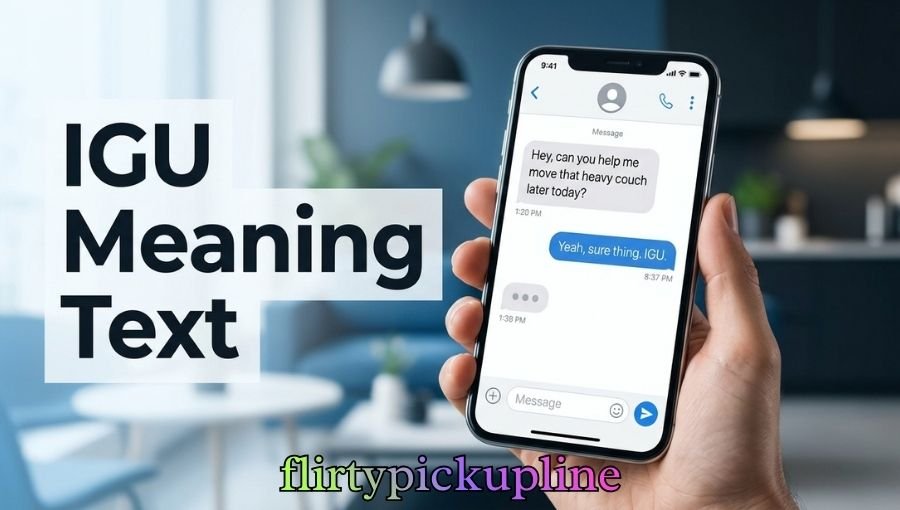
IGU Meaning Text: Definition, Context, Examples, and Modern Usage (2026 Guide)
You get a message from a friend that simply says, “Don’t worry, IGU.” You understand the general feeling, but you may still wonder what those three letters actually mean. If you’ve searched for IGU meaning text, you’re probably trying to decode a short abbreviation that appeared in a text, DM, comment, or casual conversation.
In most everyday texting situations, IGU means “I got you.” It can mean “I understand,” “I’ll help you,” “I’ve got this,” or “you can count on me,” depending on the conversation.
Short forms like this are popular because people want to communicate quickly without typing full sentences. Their meanings can also shift slightly with tone and context. That’s especially true on platforms such as Instagram, Snapchat, TikTok, and Threads, where casual language moves quickly between friends and strangers.
If you’re unsure whether someone is offering help, showing understanding, or simply acknowledging what you said, context provides the answer. Let’s break down exactly how IGU meaning text works in real conversations.
Quick Answer / Quick Definition of “IGU Meaning Text”

When people ask about IGU meaning text, they usually want to know whether “IGU” means “I got you.” It is an informal texting abbreviation used to show understanding, support, agreement, or willingness to help. In simple terms, “IGU” often tells someone, “I understand you” or “you can count on me.”
Also Read This: HY Meaning
Detailed Meaning Breakdown
Primary Meaning
The most common interpretation of IGU in casual messaging is “I got you.”
The phrase can carry several closely related ideas. Someone might use it to say they understand your situation, will take care of something, or are willing to help.
For example:
“Can you send me the address?”
“IGU.”
Here, the sender means, “I got you,” or “Sure, I’ll send it.”
In another conversation:
“I’m having a rough day.”
“IGU. Call me if you need anything.”
The abbreviation now communicates emotional support rather than simply agreeing to perform a task.
Secondary Meanings
The surrounding message can give IGU a slightly different shade of meaning.
It may suggest “I understand you,” “I hear you,” “I’ve got your back,” or “I’ll handle it.” These aren’t completely separate definitions. They’re natural interpretations of the phrase “I got you.”
A friend saying “IGU” after you explain a problem is usually acknowledging what you’ve said. A coworker using it in a casual chat may mean they’ll take care of a small task.
The relationship matters, too. A close friend can use the abbreviation warmly, while someone you barely know may use it simply as quick acknowledgment.
Rare or Misinterpreted Meanings
Not every three-letter abbreviation has one universal definition, so context should always come first.
Some readers may assume IGU means something different because abbreviations can overlap across communities, industries, and languages. However, in ordinary English texting, “I got you” is the safest interpretation when the conversation is informal and supportive.
Don’t automatically treat IGU as romantic, sarcastic, or deeply emotional. The words around it determine the real message.
What “IGU Meaning Text” Means in Different Contexts
In Texting and Messaging
In ordinary text messages, IGU is usually a fast way to say “I got you.”
Someone might send:
“Can you remind me before the meeting?”
“IGU.”
That means they’ll remember to do it.
Another example:
“I don’t know how I’m going to finish this tonight.”
“IGU. I’ll help you.”
Here, IGU has a supportive meaning.
One useful clue is what comes before the abbreviation. If someone has asked for a favor, it usually means they’ll help. If you’ve shared an opinion or problem, it can mean they understand.
On Social Media Platforms
On Instagram, Snapchat, TikTok, and Threads, IGU can appear in DMs, comments, captions, or stories. Its meaning generally stays close to “I got you,” but the tone can change with the platform.
On Instagram, a friend might comment “IGU” after you ask someone to save you a seat. On Snapchat, it can work as a quick reply to a personal request. TikTok users may use it casually in comments when agreeing with someone’s situation.
Threads tends to encourage conversational replies, so IGU may appear as a short acknowledgment during a discussion.
The platform doesn’t create a completely new definition. The surrounding conversation does.
In Dating and Relationships
In romantic conversations, IGU can sound reassuring.
For example:
“I’m nervous about tomorrow.”
“IGU ❤️”
Depending on the relationship, this may mean “I’ve got your back” or “I’m here for you.”
It can also be practical rather than romantic:
“Can you pick me up after work?”
“IGU.”
Don’t read romance into the abbreviation by itself. A heart, affectionate nickname, previous conversation, or established relationship may provide stronger clues.
In Professional Communication
IGU is best reserved for informal workplace communication when your team already uses relaxed language.
A teammate might write:
“Can you cover the first part of the presentation?”
“IGU.”
Among close colleagues, that may be perfectly understandable.
For a manager, client, customer, formal email, application, or important business message, spelling out the idea is safer. “I’ve got it” or “I’ll take care of it” sounds clearer and more professional.
Cultural or Regional Differences
The phrase “I got you” is strongly associated with casual American English, although the expression is understood much more broadly.
Age and online communities can influence how familiar someone is with IGU. Younger users who regularly communicate through abbreviations may understand it immediately, while another reader may need the phrase written out.
A small personal rule helps here: if the relationship is formal or the meaning really matters, don’t make the reader decode your message.
Tone, Psychology & Why People Use It
Why People Use It & What It Signals Socially
IGU is attractive because it’s short, reassuring, and efficient.
Instead of writing “Don’t worry, I understand what you’re saying and I’ll help you,” someone can type three letters and rely on shared conversational knowledge.
It can signal availability, loyalty, understanding, or cooperation. That’s why the phrase often feels more personal than a simple “OK.”
There is also a social benefit. A short supportive response can make a conversation feel relaxed and familiar.
Emotional Layer Behind It
The emotional tone depends heavily on punctuation and context.
“IGU” can sound neutral and practical. “IGU!!” feels more energetic. “IGU ❤️” can sound affectionate. A reply such as “Yeah, IGU” might feel more restrained.
A useful distinction is this: the abbreviation itself isn’t strongly emotional. The surrounding words create most of the emotion.
If someone responds with only “IGU” after you shared something serious, you may find it warm or slightly brief depending on your relationship. That’s where misunderstandings can occur.
10 Real Conversation Examples (Explained)
- Message: “Can you bring my charger tomorrow? IGU?”
Meaning: The sender is asking whether you’ll handle the request. Tone: Casual. Interpretation: A friendly favor. - Message: “I know you’re stressed. IGU.”
Meaning: “I understand what you’re going through.” Tone: Supportive. Interpretation: The person is offering emotional reassurance. - Message: “Need someone to save me a seat.” / “IGU.”
Meaning: “I’ll save one for you.” Tone: Friendly and practical. Interpretation: A simple promise to help. - Message: “Nobody understands why I’m upset.” / “IGU, honestly.”
Meaning: “I understand you.” Tone: Empathetic. Interpretation: The sender is identifying with your feelings. - Message: “Can you finish the slides?” / “IGU.”
Meaning: “I’ve got it.” Tone: Efficient. Interpretation: The task is being accepted. - Message: “I don’t want to talk about it right now.” / “IGU.”
Meaning: “I understand.” Tone: Respectful. Interpretation: The sender is acknowledging your boundary. - Message: “You’re picking me up at 8, right?” / “IGU 😂.”
Meaning: “Yes, I’ve got you.” Tone: Playful. Interpretation: A casual confirmation. - Message: “I’m scared about the interview.” / “IGU. You’ll do great.”
Meaning: “I’m here for you.” Tone: Encouraging. Interpretation: Emotional support rather than a literal task. - Message: “Don’t tell anyone yet.” / “IGU.”
Meaning: “I understand; I’ll keep it between us.” Tone: Reassuring. Interpretation: The sender is signaling discretion. - Message: “I’ll handle the reservation. IGU.”
Meaning: “I’ve got this.” Tone: Confident. Interpretation: The sender is taking responsibility.
Where Misunderstandings Happen
Context Confusion
The biggest problem is assuming the abbreviation has exactly one meaning.
If someone says “IGU” after you describe a difficult experience, they probably mean “I understand” or “I’ve got your back.” After a request, they may mean they’ll handle it.
Read the entire exchange before interpreting the three letters.
Generational Gap
Abbreviations can create a small communication gap between age groups.
Someone familiar with internet slang may see IGU as completely normal. Another person may wonder whether it is a typo. Neither reaction is unusual.
When communicating with someone who rarely uses texting slang, plain English prevents unnecessary confusion.
Platform Differences
The same abbreviation can feel different on different platforms.
A TikTok comment may be extremely casual, while a workplace DM may require more clarity. Instagram DMs between close friends allow more shorthand than a professional message.
The platform influences the tone, but the basic phrase remains tied to context.
Similar Words, Symbols, or Abbreviations
| Term | Meaning | How It Differs from IGU |
|---|---|---|
| I got you | I understand / I’ll help | Full phrase behind the abbreviation |
| I gotcha | I understand / I’ve got it | More conversational and playful |
| Got you | Understood / I’ll handle it | Shorter natural-language form |
| I understand | I understand your point | Focuses more directly on comprehension |
| No worries | It’s okay | Reassures rather than promising help |
| Bet | Okay / definitely | Often signals agreement or confidence |
| FYI | For your information | Shares information instead of offering support |
| IMO | In my opinion | Introduces a personal viewpoint |
| LOL | Laughing out loud | Expresses amusement rather than agreement |
| IDK | I don’t know | Expresses uncertainty |
When Not to Use “IGU Meaning Text”
Professional Risks
Avoid unexplained slang in formal emails, resumes, client communications, legal documents, and official messages.
Even when the recipient understands it, an abbreviation can make a serious message appear too casual. “I’ll take care of it” is clearer than “IGU” when responsibility needs to be unmistakable.
Cultural Risks
Not every reader will know internet shorthand.
If you’re communicating across cultures or with someone who speaks English as a second language, spelling out the phrase can be more considerate.
Clarity beats cleverness when there’s room for confusion.
Tone Risks
A very short response can sometimes look dismissive.
If a friend tells you something painful and you answer only “IGU,” they might appreciate the support—or they might feel you didn’t say enough.
When the subject is emotional, adding a few words usually creates a warmer message.
Expert Tips for Using “IGU Meaning Text” Correctly
- Use IGU mainly in casual conversations.
- Look at the context before deciding what “I got you” means.
- Use the full phrase when speaking to someone unfamiliar with texting slang.
- Don’t assume IGU is automatically romantic.
- Add a sentence when the situation is emotional or serious.
- Use punctuation or emojis carefully because they can change the perceived tone.
- Avoid unexplained abbreviations in formal business communication.
- If someone sends IGU and you’re unsure, simply ask, “What do you mean by IGU?”
- Remember that the same shorthand can feel warmer between close friends than between acquaintances.
- When clarity matters more than speed, write the full thought instead.
Frequently Asked Questions
1. What does IGU mean in text?
In most casual English text conversations, IGU means “I got you.” Depending on context, that can mean “I understand,” “I’ll help you,” “I’ve got it handled,” or “I’m here for you.” The sentence or message surrounding IGU usually reveals which interpretation makes the most sense.
2. Is IGU positive or negative?
IGU is generally positive or neutral because it commonly communicates understanding, cooperation, or support. However, a one-word abbreviation can sometimes feel cold if the conversation is serious. Tone depends on the relationship, subject, punctuation, and what the sender says before or after it.
3. Can IGU have a romantic meaning?
Yes, but IGU isn’t inherently romantic. A partner might use it to mean “I’ve got your back” or “I’m here for you.” In a friendship, it can carry exactly the same supportive meaning. Romantic context comes from the wider conversation rather than the abbreviation itself.
4. How should I respond when someone says IGU?
Your response should match what they appear to mean. If they’re offering help, you could say “Thanks, I appreciate it.” If they’re showing understanding, “Thank you for understanding” works well. When you’re unsure, asking a quick clarification is better than guessing at an important conversation.
5. Does IGU mean “I got you” on Instagram?
Usually, yes. On Instagram, IGU may appear in DMs, comments, stories, or casual conversations as shorthand for “I got you.” The exact emotional meaning still depends on context. A comment from a friend, for example, may sound more playful than the same abbreviation from someone you barely know.
6. Is IGU the same as “I gotcha”?
They’re very similar, but they aren’t identical in style. “I gotcha” is a spoken-sounding, informal version of “I got you.” IGU is simply an abbreviated written form. Both can express understanding or willingness to help, although “I gotcha” often sounds more conversational.
7. Does IGU mean “I understand you”?
It can. When someone uses IGU after you’ve explained an opinion, emotion, or personal problem, “I understand you” may be the best interpretation. It doesn’t necessarily mean the person agrees with everything you said. They may simply be acknowledging that they understand your perspective.
8. Is IGU appropriate for work messages?
It depends on the workplace and relationship. In a relaxed internal chat, colleagues may understand it easily. For clients, managers, formal emails, or important business communication, a phrase such as “I’ve got it” or “I’ll take care of that” is more professional and leaves less room for interpretation.
Final Summary & Smart Usage Advice
The simplest answer to IGU meaning text is “I got you.” In everyday messaging, those three letters can communicate understanding, support, agreement, or a promise to handle something.
The exact meaning depends on the situation. If a friend asks for a favor, IGU may mean “I’ll do it.” If someone shares a personal problem, it may mean “I understand” or “I’ve got your back.” In dating, it can sound reassuring without necessarily being romantic. On social media, it’s generally casual shorthand, while professional settings call for more explicit language.
The biggest mistake is treating IGU as a fixed phrase with one emotional meaning. Context matters. So do the relationship, platform, and surrounding words.
When you’re chatting with close friends, IGU can be quick and natural. When the subject is serious, adding a few words makes your intention clearer. And when you’re communicating professionally, the full phrase is usually the better choice.
If you’ve encountered IGU meaning text in a message, don’t overthink the abbreviation itself. Read what came before and after it.
The memorable rule: IGU usually means “I got you”—but the conversation tells you exactly what “got you” means.

Hi, I’m Noah Bennett. I work at FlirtyPickUpLine.com, where I cover popular slang, abbreviations, and online expressions. My goal is to give readers clear meanings and useful examples.