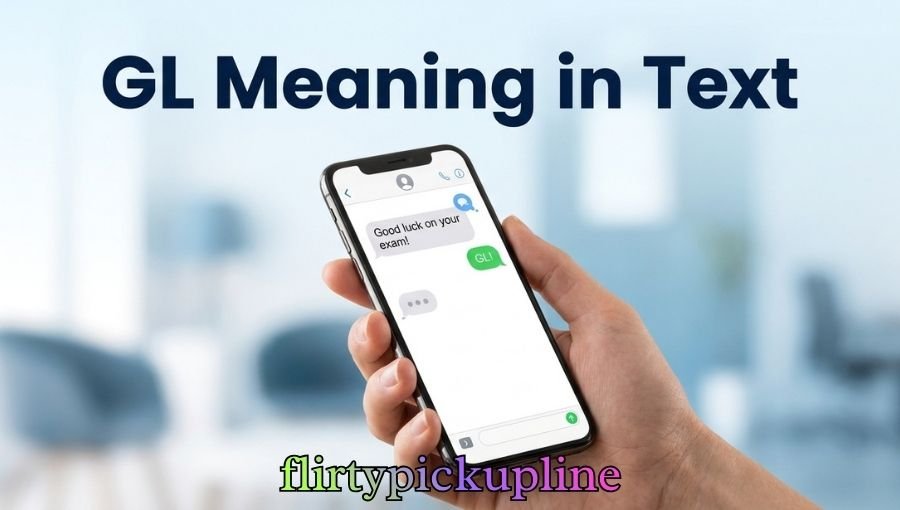
GL Meaning in Text: Definition, Context, Examples, and Modern Usage (2026 Guide)
You’re texting a friend before their big job interview. They tell you, “I’m heading in now.” You reply, “GL!” They probably won’t need a dictionary to understand you. In this situation, GL meaning in text is usually “good luck.”
The abbreviation is short, casual, and especially common in online conversations, gaming, social media, and situations where someone is about to face a challenge. You’ll also see it around exams, competitions, dates, interviews, presentations, and other moments where a person could use encouragement.
People continue searching for this abbreviation because online language changes quickly. A two-letter response can feel obvious to one person and confusing to another, especially when age, platform, or context changes.
So, does GL always mean “good luck”? Not necessarily. In some conversations, people may use it for something else, such as “good-looking,” but context usually makes the intended meaning clear.
This guide breaks down the GL meaning in text, shows how people actually use it, and explains when it sounds friendly, neutral, awkward, or inappropriate.
Quick Answer / Quick Definition of “GL Meaning in Text”

The most common GL meaning in text is “good luck.” People use GL as a quick way to wish someone success before an event, challenge, game, test, or important moment. It’s casual and generally positive. In short, when someone texts “GL,” they’re usually saying, “Good luck!”
Also Read This: OOO Meaning in Text
Detailed Meaning Breakdown
Primary Meaning
In everyday texting, GL most often stands for “good luck.”
It works as a brief expression of support. For example:
“My interview starts in 10 minutes.”
“GL!”
The sender isn’t simply stating two words. They’re offering encouragement in a compact form.
You’ll see this meaning frequently in online gaming, where players may type “GL” before a match begins. Gamers also commonly use “GLHF,” meaning “good luck, have fun.”
Secondary Meanings
Less commonly, GL can represent phrases such as “good-looking” or other terms specific to a particular conversation, community, or workplace.
For instance, someone discussing a person’s appearance might write “GL” as shorthand for “good-looking,” although this usage is much less universal.
That distinction matters. If you’re unsure what someone means, look at the surrounding words rather than assuming every GL means the same thing.
Rare or Misinterpreted Meanings
Some abbreviations have several meanings depending on the community using them. GL is one of them.
A person unfamiliar with gaming slang might interpret “GL” differently from an experienced gamer. Likewise, someone receiving the message in a dating conversation may wonder whether the abbreviation refers to appearance.
My practical rule is simple: context beats the abbreviation itself. Read the sentence before deciding what GL means.
What “GL Meaning in Text” Means in Different Contexts
In Texting and Messaging
In ordinary texts, GL is usually a quick good-luck message.
“I have my driving test tomorrow.”
“GL! You’ve got this.”
It can stand alone or appear at the end of another sentence:
“Hope everything goes well—GL!”
The tone is normally friendly and supportive. A person who sends only “GL” may simply be typing quickly, not trying to sound distant.
I’ve noticed that short messages often look colder on screen than they feel in real life. Don’t automatically treat brevity as a lack of interest.
On Social Media Platforms
The GL meaning in text generally remains “good luck” on Instagram, Snapchat, TikTok, and Threads, although the setting can change how it feels.
On Instagram, someone might comment “GL” beneath a post about an upcoming competition. On Snapchat, it could appear in a private message before an exam. On TikTok, viewers may use it in comments when a creator is attempting a difficult challenge.
On Threads, the same abbreviation can appear in casual replies or conversations.
The platform doesn’t usually change the basic meaning. The surrounding content does.
In Dating and Relationships
In dating conversations, GL can still mean “good luck.”
For example:
“I’m finally asking her out tonight.”
“GL 😂”
Here, the message may carry encouragement plus a playful tone.
However, context matters more in romantic conversations. If someone is discussing appearance, GL could potentially have another meaning. If you’re unsure, don’t build a romantic interpretation around two letters alone.
In Professional Communication
The GL meaning in text can also appear in workplace chats, especially among colleagues who already communicate casually.
“Big presentation at 2. GL!”
Still, it’s better to use “Good luck” in formal emails, client communication, applications, or messages to senior executives.
Abbreviations can make a professional message feel overly casual. When the relationship matters more than speed, spelling out the phrase is usually safer.
Cultural or Regional Differences
“Good luck” is widely understood in English-speaking online communities, and GL is particularly familiar among gamers and internet users.
Age can make a difference, though. Younger users who spend substantial time in online communities may recognize abbreviations instantly, while someone who rarely uses texting slang may need context.
The abbreviation is therefore less about geography than digital culture, age, and community.
Tone, Psychology & Why People Use It
Why People Use It & What It Signals Socially
People use GL because it saves time while still communicating support.
Typing “Good luck!” takes only a few extra seconds, but GL feels even faster. In gaming, live chats, and rapid texting, that convenience matters.
It can signal encouragement, friendliness, solidarity, or casual confidence.
A teammate typing “GL” before a match isn’t usually trying to start a deep conversation. They’re acknowledging the moment and wishing others well.
Emotional Layer Behind It
The emotional tone depends heavily on punctuation and surrounding words.
Friendly: “GL!! You’re going to crush it.”
Neutral: “GL tomorrow.”
Playful: “GL 😂”
Potentially cold: “gl.”
That last example isn’t automatically rude. Some people simply type in lowercase. But if the sender normally writes warmly and suddenly responds with only “gl,” you might perceive a change in mood.
10 Real Conversation Examples (Explained)
- Message: “Exam starts at 9. GL!”
Meaning: Good luck on the exam. Tone: Friendly and encouraging. Likely interpretation: The sender is showing support. - Message: “GLHF everyone.”
Meaning: Good luck, have fun. Tone: Upbeat gaming slang. Likely interpretation: A player is wishing the group a good match. - Message: “I’m pitching the idea today.” — “GL!”
Meaning: Good luck with the presentation. Tone: Supportive but brief. Likely interpretation: The responder wants to encourage the speaker. - Message: “Trying to ask him out tonight 😭” — “GL 😂”
Meaning: Good luck with the romantic attempt. Tone: Playful. Likely interpretation: The friend is cheering them on while joking around. - Message: “My first marathon is Sunday.” — “GL!”
Meaning: Good luck with the race. Tone: Positive. Likely interpretation: A simple show of encouragement. - Message: “Boss meeting in five minutes.” — “GL.”
Meaning: Good luck in the meeting. Tone: Neutral and concise. Likely interpretation: The coworker is acknowledging the stressful situation. - Message: “Going live for the first time tonight.” — “GL!!”
Meaning: Good luck with the livestream. Tone: Enthusiastic. Likely interpretation: Genuine excitement for the creator. - Message: “Final boss time.” — “GLHF.”
Meaning: Good luck and have fun during the game. Tone: Gamer-friendly. Likely interpretation: A casual pre-game greeting. - Message: “I have no idea how this interview will go.” — “GL, seriously.”
Meaning: Good luck; the sender genuinely hopes things go well. Tone: Warm and reassuring. Likely interpretation: More heartfelt than a routine abbreviation. - Message: “Wish me luck.” — “gl”
Meaning: Good luck. Tone: Minimal. Likely interpretation: Probably supportive, although the lowercase style may feel less enthusiastic.
Where Misunderstandings Happen
Context Confusion
The biggest problem is assuming an abbreviation has only one possible definition.
If someone says “GL on your test,” the meaning is obvious. If GL appears in a conversation about someone’s appearance, however, another interpretation may be possible.
Generational Gap
People who grew up using texting shortcuts may immediately understand GL. Others may read it as an unexplained acronym.
This can create an awkward moment where one person thinks they’ve been friendly and the other wonders what they meant.
Platform Differences
Gaming communities tend to use GL naturally, while a formal business environment may favor complete phrases.
Social platforms also encourage rapid, informal communication, so abbreviations can feel more normal there than in professional correspondence.
Similar Words, Symbols, or Abbreviations
| Term | Meaning | How It Differs from GL Meaning in Text |
|---|---|---|
| GLHF | Good luck, have fun | Adds a wish to enjoy the activity |
| GF | Good fight | Often used after a game or competition |
| GG | Good game | Usually acknowledges a completed game |
| Good luck | Wishing someone success | Same core meaning, but fully spelled out |
| Best of luck | Stronger good-luck wish | Sounds slightly warmer or more formal |
| You got this | Encouragement | Focuses on confidence rather than luck |
| Break a leg | Good luck | Idiomatic expression, especially around performances |
| WP | Well played | Praises someone’s performance rather than wishing success |
| LMK | Let me know | Different meaning; asks someone to provide information |
| IMO | In my opinion | Expresses a viewpoint rather than encouragement |
When Not to Use “GL Meaning in Text”
Professional Risks
Avoid GL when messaging clients, customers, recruiters, or unfamiliar business contacts.
“Good luck with the presentation” sounds polished. “GL” may sound careless, even when your intention is positive.
Cultural Risks
Not everyone knows internet shorthand. If the recipient isn’t familiar with texting abbreviations, your message could create unnecessary confusion.
When in doubt, use the complete phrase.
Tone Risks
A two-letter message can sometimes look dismissive.
Compare “GL!” with “Good luck! I hope it goes really well.” The second version communicates more warmth and personal attention.
Expert Tips for Using “GL Meaning in Text” Correctly
- Use GL with friends when the conversation is casual.
- Use it before challenges, such as games, tests, interviews, or competitions.
- Consider your audience before using internet shorthand.
- Use “GLHF” in gaming when you want to include “have fun.”
- Don’t assume GL always means good luck without checking context.
- Spell it out professionally when communicating with clients or formal contacts.
- Add punctuation or words if you want the message to feel warmer.
- Match the recipient’s style rather than suddenly switching to heavy slang.
- Ask for clarification if someone uses GL and the meaning isn’t obvious.
- Remember that tone comes from context, not just the abbreviation.
Frequently Asked Questions
What does GL mean in text?
The most common GL meaning in text is “good luck.” It’s a casual abbreviation used to wish someone success before an event, challenge, game, exam, interview, or similar situation. Online gamers use it frequently, but it can also appear in everyday texts and social media conversations.
Is GL positive or negative?
GL is generally positive or neutral because it expresses a good-luck wish. The emotional impact depends on how it’s written. “GL!!” can feel enthusiastic, while a bare “gl” may seem distant to some readers. Lowercase writing alone doesn’t prove that the sender is annoyed or upset.
Can GL have a romantic meaning?
GL isn’t inherently romantic. In a dating conversation, it usually still means “good luck,” particularly when someone is discussing a date or romantic situation. Other interpretations are possible in conversations about appearance, so surrounding words matter. Don’t assume GL is flirting simply because the sender is someone you’re dating.
How should I respond when someone texts GL?
A simple response such as “Thanks!”, “Thank you!” or “I appreciate it” works well. If you’re heading into something stressful, you can also respond with “Thanks, I’ll need it!” There’s no special response required because GL is normally just a brief expression of support.
Why do gamers say GL?
Gamers use GL as a quick way to say “good luck” before a match or competitive round. You’ll also see GLHF, which means “good luck, have fun.” These phrases fit gaming culture because players often communicate rapidly before gameplay begins and don’t need long greetings.
Does GL mean good-looking?
Sometimes, but this is much less universal than “good luck.” If GL appears in a conversation specifically about someone’s appearance, the sender may intend a different abbreviation. However, you shouldn’t assume that meaning without context. The topic and surrounding words usually provide the strongest clue.
Does GL mean the same thing on TikTok and Instagram?
Generally, yes. On both platforms, GL can mean “good luck” when someone is responding to a challenge, event, competition, or personal goal. The platform itself doesn’t normally redefine the abbreviation. What changes is the setting: a public comment may feel more casual than a private message.
Is GL rude in a text?
Usually not. GL is normally friendly, but its shortness can make it feel abrupt in some conversations. If you’re worried about sounding cold, write “Good luck!” or add a personal phrase such as “GL—you’ve got this!” That small addition makes your intention much clearer.
Final Summary & Smart Usage Advice
The most common GL meaning in text is simple: “good luck.” It’s a compact way to encourage someone before a test, game, interview, competition, date, performance, or other challenge.
The abbreviation works especially well in casual digital conversations. Friends, gamers, classmates, and social-media users can usually understand it without explanation. Its popularity comes from convenience: two letters can communicate a complete supportive message.
Still, context matters. GL doesn’t have one universal meaning in every conversation. Less common interpretations can appear when people are discussing appearance, specialized communities, or other topics. That’s why reading the surrounding message is always smarter than interpreting an abbreviation in isolation.
For professional communication, spelling out “Good luck” is generally the better choice. It sounds clearer and more polished, particularly when you’re speaking with a client, manager, recruiter, or someone you don’t know well.
If someone sends you GL, you can safely respond with “Thanks!” in most situations. And if the meaning genuinely isn’t clear, asking is better than guessing.
The easy rule to remember: GL usually means “good luck”—but context tells you exactly what the sender intended.

Hi, I’m Lucas Anderson. I work at FlirtyPickUpLine.com, writing simple articles about modern slang, texting language, and word meanings. I enjoy helping readers understand new terms quickly.